
News
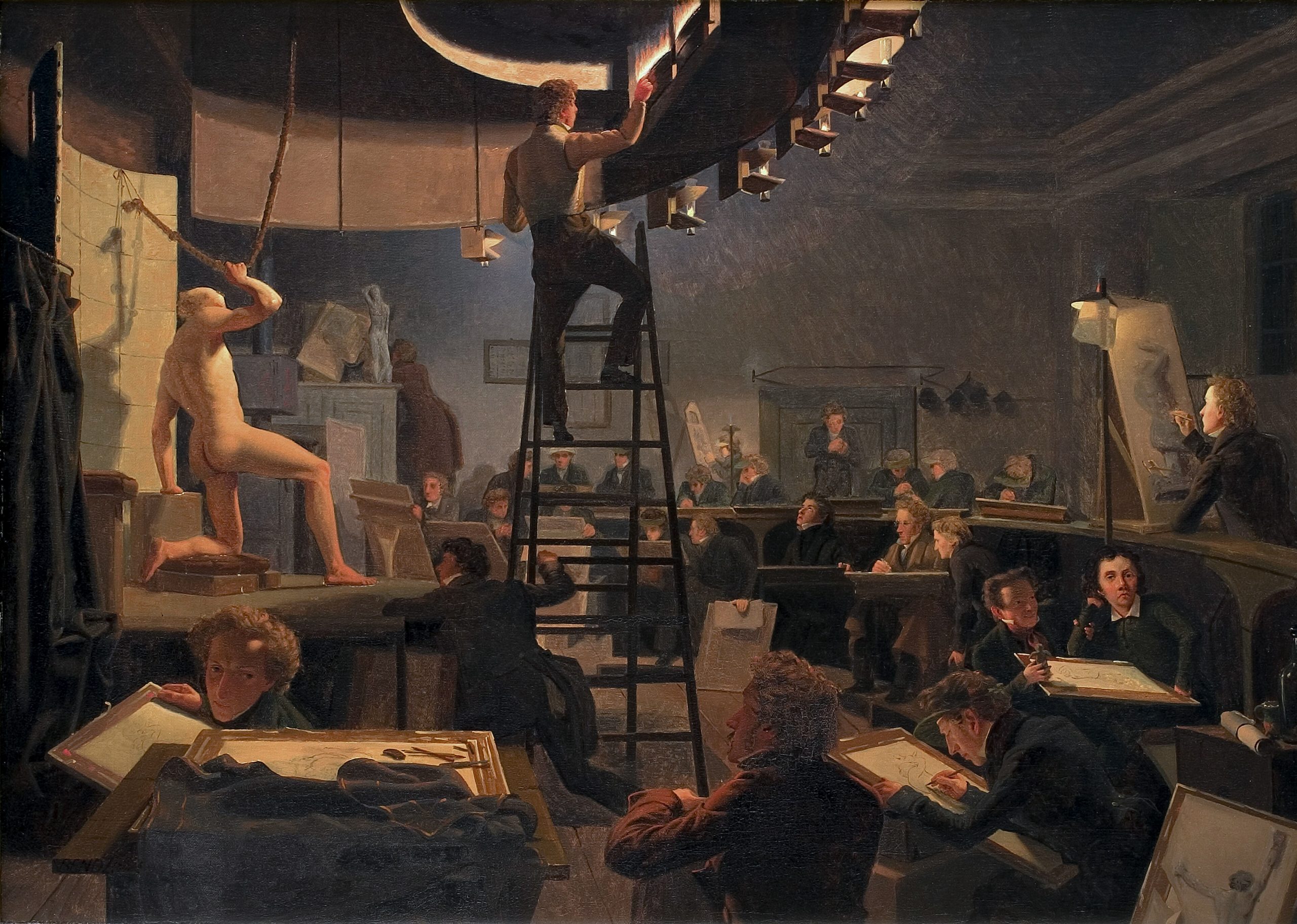
Under the concepts of autonomy and death, this conference examines one of the most char-acteristic ambivalences in the understanding of art during Romanticism and German Idealism. Over the course of modernity, works of art acquired increasing independence by distancing themselves from the political, religious, and social spheres, eventually becoming—in the words of the young Schelling—the “organon” of philosophy. Yet that very independence carries within it a pre-monition of its own end: autonomy, in freeing art from any function subordinate to other spheres, is also what makes conceivable—as the Hegelian tradition has argued—the announcement of its end, or death.
Autonomy and death can be read, on the one hand, as two rival theses, in tension or outright contradiction; but also, on the other, as two compatible aspects of a single gesture of emancipation. The aim of the conference is to examine the relationship between autonomy and the end of art both in its contradictory character and in its dialectical tension.
The first panel of the conference traces the arc running from Critical philosophy to German Romanticism and Idealism, united by the promotion of the aesthetic phenomenon as a central problem of philosophy. Kant closes out his critical project with an analysis of judgments of taste, conferring on the beautiful a philosophical dignity that Schiller radicalizes: in the Letters on the Aesthetic Education of Man, the play drive becomes the mediating instance between nature and freedom. This gesture is not an isolated one: the Systemprogramm places the idea of beauty at the point of unity of all ideas. For Hölderlin, being prior to the split between subject and object is inaccessible to the concept and admits only an aesthetic approach. A similar gesture is found in the Romantic circle of Jena, where, from different approaches, art compensates for a structural limit of philosophical reflection. For Novalis and Fr. Schlegel, the absolute escapes all rational fixation, such that, as Schlegel puts it, “where philosophy ends, poetry must begin.”
Against this prominence of art stands its critical counterpart: suspicion regarding its standing vis-à-vis philosophy. Already present in Plato’s critique of the poets, this suspicion takes its most radical form in Hegel, for whom it is precisely the autonomy won by art—its detachment from any religious or political function—that makes conceivable its end as the supreme form of spirit: freed from everything, art can only fully unfold its own principle, but it is that very principle which is superseded by forms more adequate to truth, such as religion and philosophy.
The conference will take place on December 3rd and 4th at the Institute of Philosophy of the Universidad Diego Portales. We invite anyone interested in participating to submit an abstract by October 15th to: